IEC 61439: Why the gap between “Claimed” and “Verified” compliance matters
In critical infrastructure, compliance isn’t just a label — it’s a process.
IEC 61439 was developed to eliminate subjective interpretation and establish a unified, evidence‑based framework for performance. It’s not enough to state that a system is compliant; it must be verified against clear, shared, and measurable criteria.
The standard is built on two essential components:
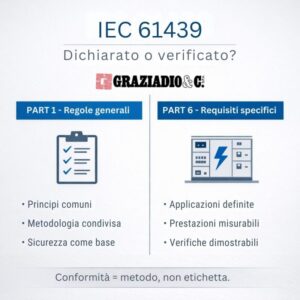
Part 1 – General Rules:
Defines the core principles, methodologies, and baseline requirements.
Part 6 – Specific Requirements:
Translates those principles into concrete, testable verifications for power distribution systems.
This structured approach ensures:
✔ Consistency in evaluation
✔ Reduced room for interpretation
✔ Greater long‑term safety, reliability, and performance
When energy is critical, the difference between what is declared and what is demonstrably verified becomes mission‑critical.

IEC 61439 was developed to eliminate subjective interpretation and establish a unified, evidence‑based framework for performance. It’s not enough to state that a system is compliant; it must be verified against clear, shared, and measurable criteria.
The standard is built on two essential components:
Part 1 – General Rules:
Defines the core principles, methodologies, and baseline requirements.
Part 6 – Specific Requirements:
Translates those principles into concrete, testable verifications for power distribution systems.
This structured approach ensures:
✔ Consistency in evaluation
✔ Reduced room for interpretation
✔ Greater long‑term safety, reliability, and performance
When energy is critical, the difference between what is declared and what is demonstrably verified becomes mission‑critical.